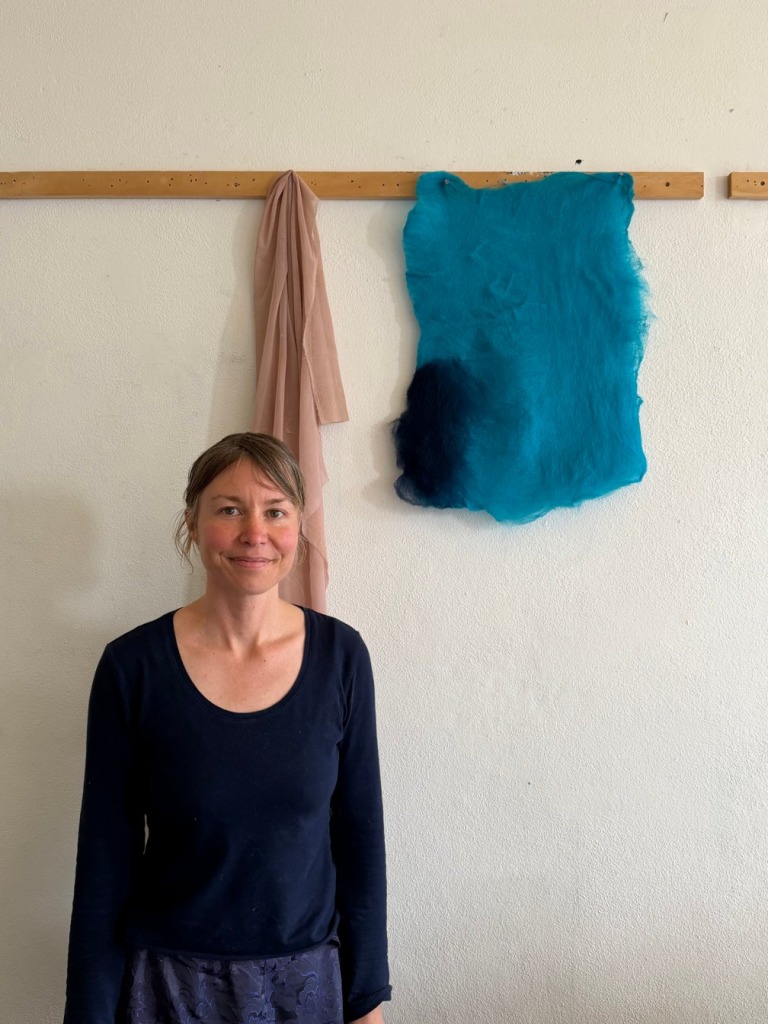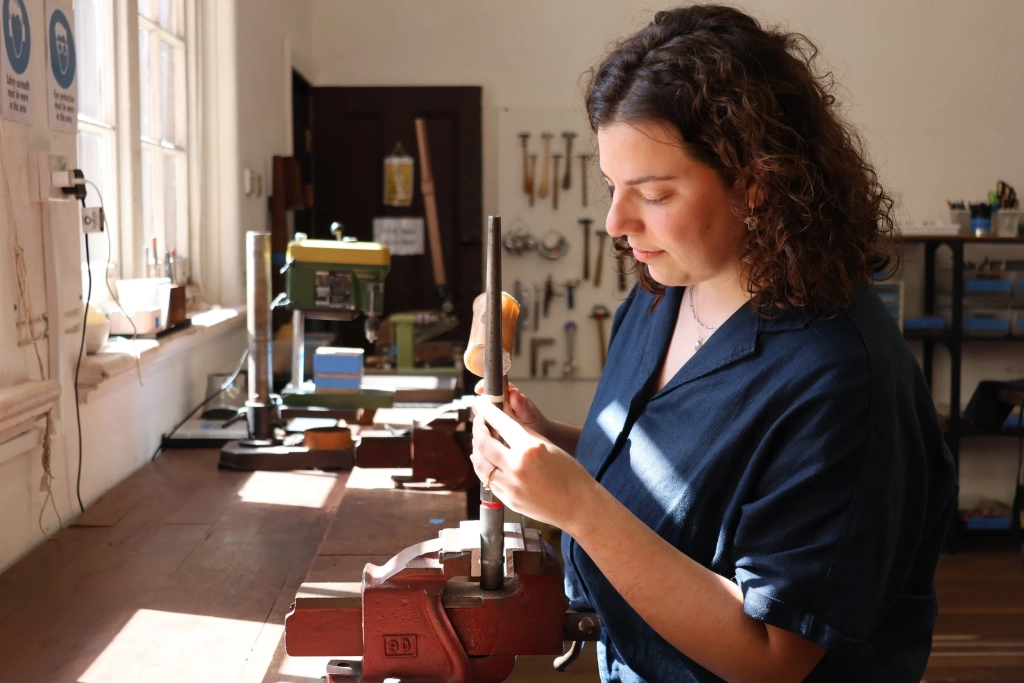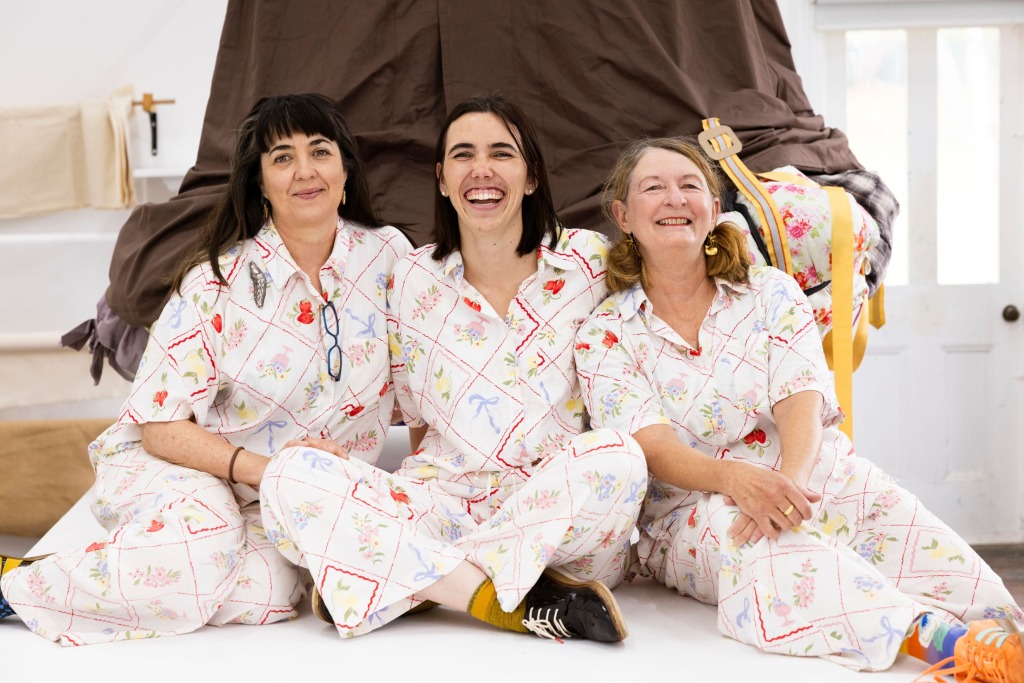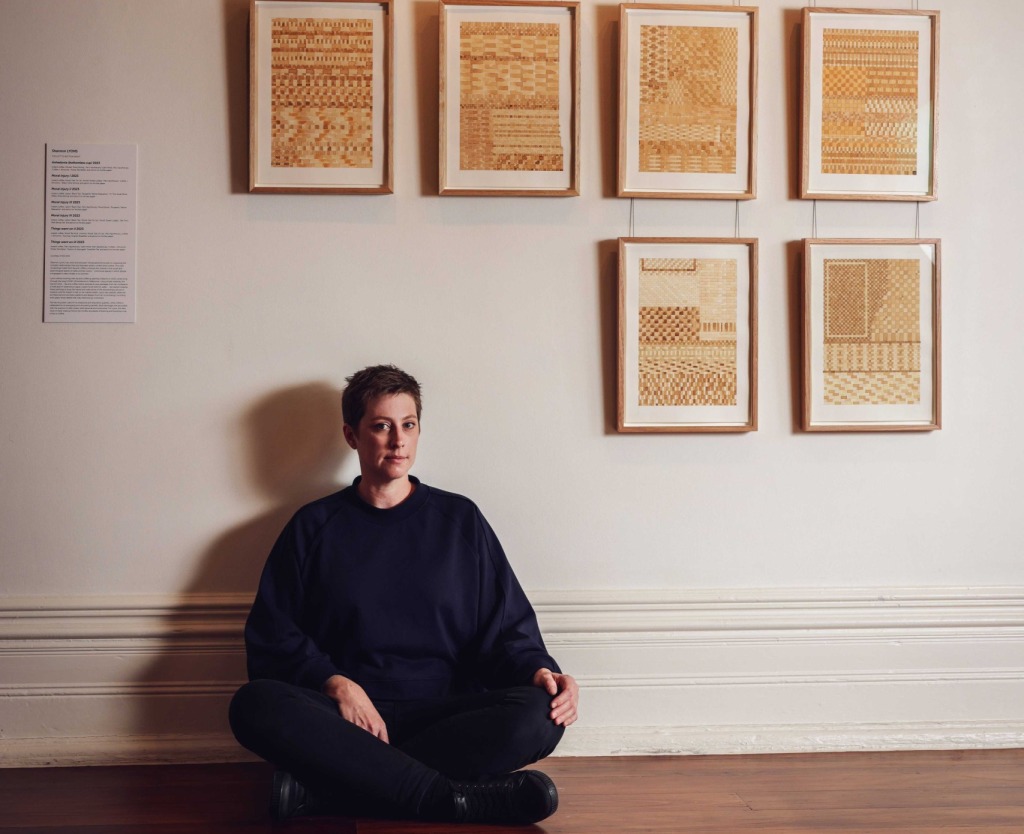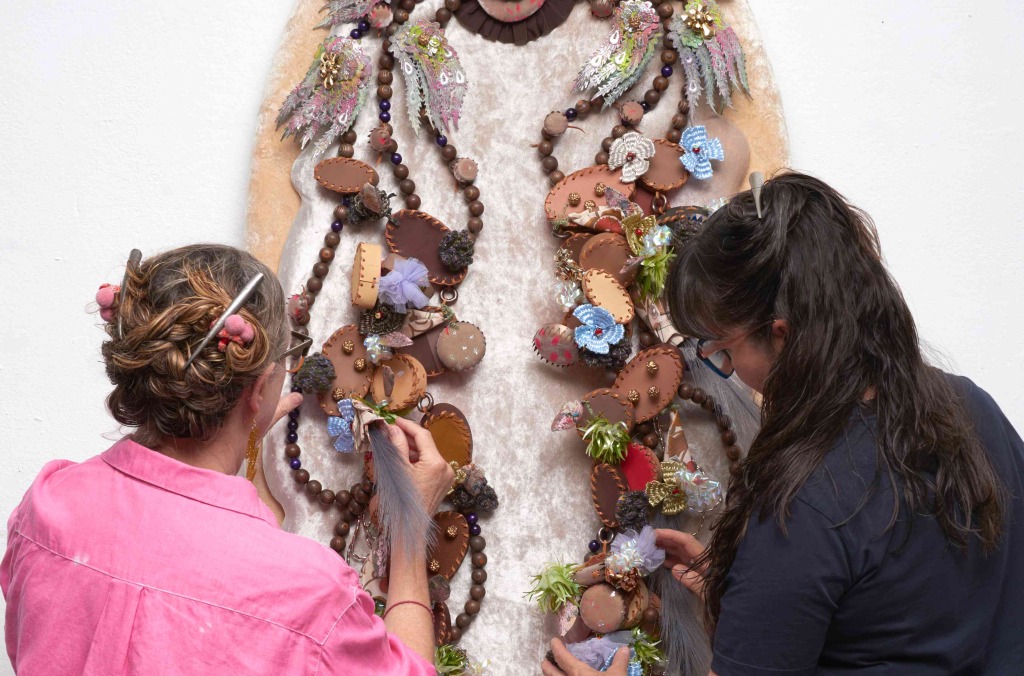
Helen Britton and Justine McKnight have been working on many of the pieces in NET OF TIME for more than a decade, and in all the years of their collaboration, Justine says, they’ve never disagreed about the direction of a piece.
“There is a great respect between us for the work and a complete trust in the process,” Helen says. “We are both aware how precious this is, and that the conditions need to be nurtured and protected so that the work can evolved in unexpected ways.”
Their exhibition NET OF TIME, curated by Anna Louise Richardson, brings eight of these works to WFAC. They’ve made them with found or inherited materials, adding something of their own lives to objects that already have histories.
Their friendship developed in 1999, when they were teaching together at Edith Cowan University. They taught a print unit together and organised a large student fashion parade. That year, they also took their students to Vietnam. Justine remembers wandering through Hanoi’s craft guild district with Helen, both caught up in the objects they were finding – and the food. Justine credits a shared “enthusiasm for the potential of materials, process and making” as the foundation of their collaboration.
There was a familiar background, too. Helen recalls “growing up as bogans in strongly left-wing families with Irish roots”. Much later, they discovered they had Irish convict family names in common.
These days, Helen is in Munich and Justine in Perth. Visits and residencies give them time together, with packages sent back and forth and plenty of online conversations in between. When they do meet up, there might be an op-shop visit, or time at the beach. They begin working on pieces together using materials from their collections, and keep working on them when they’re apart. Helen says they have a sense of when something they’ve found belongs in their shared work.
The appeal of an old object has a lot to do with what it’s already been through. Both want to acknowledge that earlier life, even as they begin doing something new with it.
“We become part of that timeline by working with them further and entwining their story with our own,” Justine says.
In The Net of Time, Helen and Justine have joined fragments of antique silk brocade with hand-knotted silk netting. The fabrics were a gift from Helen’s friend Anna von Waechter, who found them at a Vienna flea market. Dated to 1770–1820, they carried evidence of earlier garments and reuse, long before either artist began working with them.
Justine doesn’t really think of these pieces as works they return to after long absences. Most have been in progress all along, sometimes slowly, with different parts coming together at different times.
“Our works take time – they are always interconnected and in process, changing and shifting with us,” Helen says.
Justine has a particular affection for The Whispers, a work made with vintage shoes embellished with beads and accompanied by recorded voices. It’s the associations they’ve made through the shoes that matter to her.
“The shoes have become markers for all the ground and time we have walked across separately and together, the WA coastline and the rich European antique markets but also the tales and travels of our ancestors.”
The Ugliest Necklace in the World, meanwhile, has its own song. This one was deliberately humorous. Justine remembers the challenges of constructing it, but also how much fun they had making it.
“While making our pieces we have a lot of fun and adventure, so this is of course transmitted into the work at some level,” Helen says.
Justine still marvels at Helen’s delight in things, and that she manages to get so much done. She remembers the generosity and encouragement Helen has offered from the beginning. Helen calls Justine “a highly intelligent, sensitive and creative force to be reckoned with”, admiring the depth and lateral connections she brings to their work.
The artists worked together at WFAC during residencies in 2024 and 2025. For Helen, seeing the pieces here is moving, bringing back memories of the late Professor Ted Snell and his support for their collaboration from the beginning. Anna Louise Richardson has continued the project Snell first envisaged. Helen describes working with her as “a blessing and honour”.
“It’s incredibly meaningful to me to bring our works to this place which has been so formative for me.”