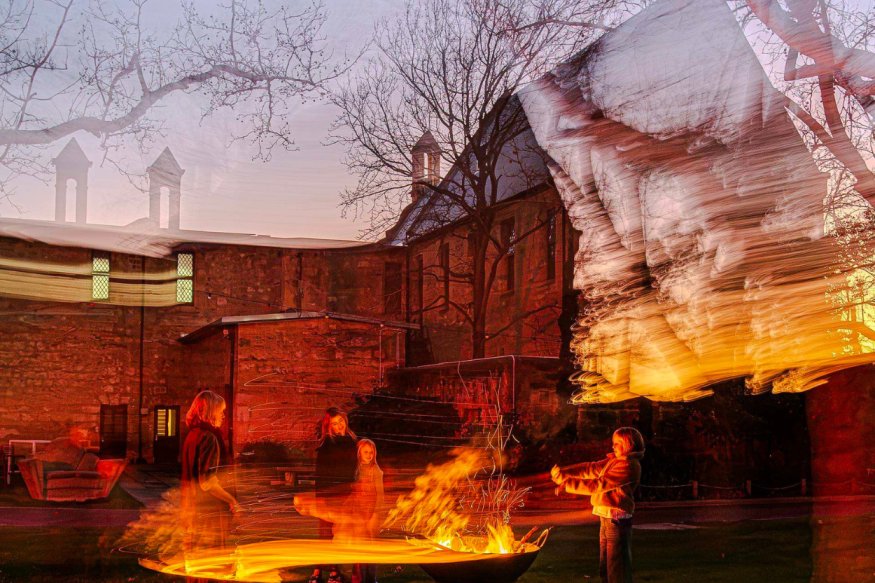
Glassblowing presents a practical problem to the independent maker: skill and motivation are not enough. They need a studio equipped with a furnace and specialised equipment. Most people cannot practically or financially hope to construct their own “hot shop”, so they rely on a space to share.
This infrastructure has been disappearing from Western Australia. Artist and event producer Stirling Kain has seen the impact of this while programming the 2026 Bazaar Makers Market, which has run at Walyalup Fremantle Arts Centre for forty-six years. For the first time in recent memory, there will be no glass makers at Bazaar. Of the few who have historically applied, one is moving interstate; another says that the lack of glass facilities means she cannot continue her practice.
A glass vase looks lovely by a window, where sunlight can pass through the colours and cast molten-looking shapes across the floor. You might assume a glass vase will always be available to you. And you’re right. When the ecology that sustains glassmaking disappears from your local area, the vase does not disappear with it. You just start buying glass vases from IKEA – which is fine – the vase will hold your flowers, it will even do the refraction thing.
What changes is not the availability of the object, but the capacity to make it. Buying the factory vase does not put money or incentive back into a local craft ecology. The shelves can remain full while craft studios, skills, teachers and makers disappear.
If we are interested in the endurance of craft, there must be mechanisms of support. Kain points to a MercyCare program supporting traditional weaving among refugees from Myanmar. Women make scarves and tunics on traditional backstrap looms, earning an income while maintaining a practice that connects them to one another and to the place they were forced to leave.
“Programs like this, where institutions recognise the importance of those craft practices and facilitate passing them on, are really important,” Kain said. Without such support, “what is lost, utlimately, culture.”
Not all craft is sustained through formal programs. Much of it survives in homes, which can also make the intricacies and value of the practice easier to dismiss. Domestic making can carry forms of knowledge that are difficult to record or quantify: skills passed between generations, familiarity with materials, and the pleasures of making something well.
“There are so many craft makers working in their homes,” she said. “I don’t know about them; I will never know about them. But I’m so happy they’re doing what they’re doing and sharing it with people they love.”
For Kain, treating domestic craft as inherently inferior to fine art overlooks both the labour involved and the knowledge it can carry. She points to West Australian artist Emma Buswell as a maker who is “punching above her weight” to keep textile craft visible and bring matrilineal traditions into a contemporary space.
Buswell’s practice draws on handcraft and knitting techniques; much of her work is created on a Singer Memo-matic knitting machine associated with 1960s domestic hobby craft. Familiar objects such as shopping bags, tracksuits and even the Coles roast chook are remade through painstaking knitting, embroidery and beadwork, setting the slowness of handcraft against consumer culture.
For Kain, Buswell’s work makes visible not only textile practice in Western Australia, but “a huge amount of time, intensive labour and learning”, as well as the resources required to make textiles at such a scale.
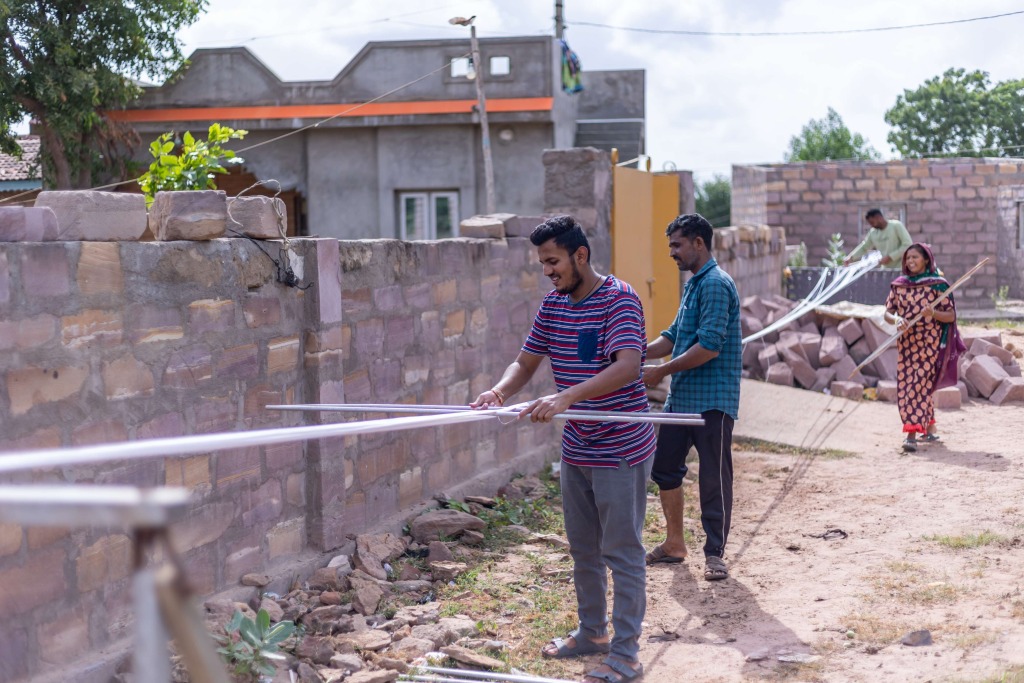
Bazaar, with its conspicuously missing glass artists, brings these questions of transmission into focus. In 2026, Kain has programmed Bazaar’s first international maker: Rajan Vankar, a fourth-generation weaver from Sarli in Gujarat’s Kutch district. His Marwada Vankar tradition extends back more than 600 years. Rajan learnt in the family workshop, watching how his parents and grandparents handled thread and moved around the loom.
“He’s using his family’s tradition and sharing that with other people,” Kain said. “The designs he’s using are specific to his community and his lineage.”
Individual makers can carry knowledge forward, but their persistence cannot substitute for the conditions that allow them to work. Kain believes artists with “a really strong vision” often have to “forge a path for themselves”.
“There just needs to be more infrastructure,” she said: education from primary and high school about “what craft is and why it’s special”, alongside facilities that are publicly available, accessible and affordable for artists.
Supporting makers is part of Kain’s own work, much of it through Bazaar, where they can become visible to thousands and generate income. Bazaar is one of the country’s longest-running craft markets and, in a state without a peak craft and design body, has become “inadvertently a tool for advocacy for craft artists in WA”.
“If people care about craft and design in this state, in this region, they should come and at least see what people are making,” Kain said. “The infrastructure is not that robust here in terms of advocacy, so show up when one can.”
Supporting Bazaar and the people who create and teach locally preserves more than culture and livelihood. It also preserves the less measurable value of craft: pleasure, beauty, community and the satisfaction of making something well.